
Very narrow and very vulnerable
a story of an endangered rare plant

After graduating, I began working at the National Botanical Garden of Georgia (NBGG). At first, I worked as an assistant researcher in the Ethnobotany Department before moving to the Plants Conservation Department. The Botanical Garden is situated in the Tsavkisis-Tskali Gorge, nestled among the southern foothills of the Sololaki Range. The stunning landscape, peaceful greenery, and the soothing sound of the Tsavkisis-Tskali River create an ideal work environment. I'll share more about the garden's fascinating history later.
Now, I'd like to share a personal story. One of my first tasks was joining an expedition. My colleagues and I were assessing the conservation status of Astragalus species using criteria from the International Union for Conservation of Nature (IUCN). Conserving species and their habitats involves a wide range of tasks, including studying their taxonomy, understanding their populations, and exploring their genetic diversity and historical evolution. However, our limited resources present challenges for scientists in choosing the most suitable tools available at that time.
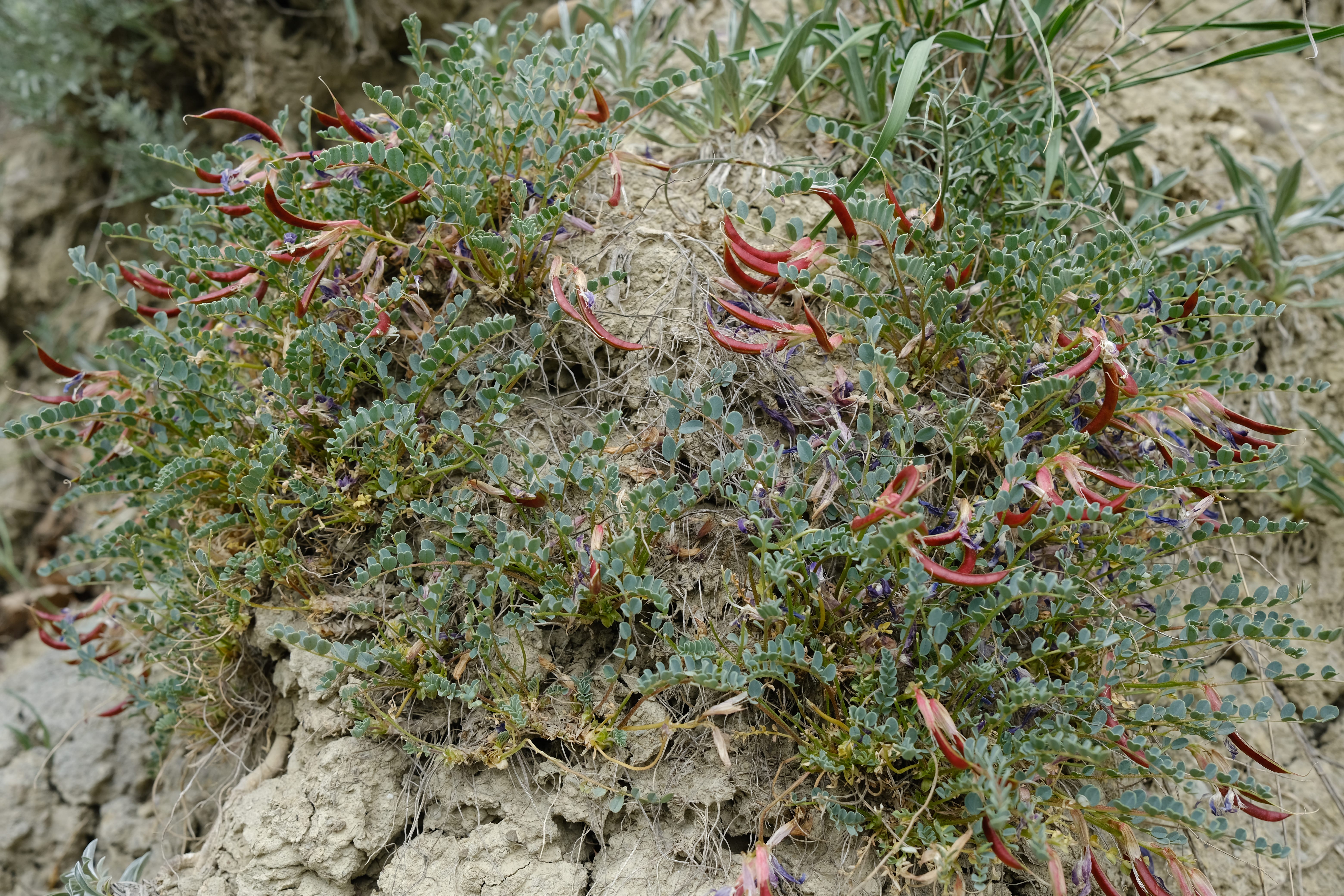
The species Astragalus cyri Fomin x Grossh. (Cyrus Milkvetch) is endemic plant from Georgia (the South Caucasus). The conservation status of Cyrus Milkvetch was assessed in 2020. However, long-term observations over several years (5 or 10) are needed to evaluate its population viability. Determining the plant's status will guide appropriate conservation measures. According to the Georgian Biodiversity Database, A. cyri (გაფანტული გლერძი in Georgian) is listed as Endangered (EN) on both the National Red List and the IUCN Red List. Its area of occupancy (AOO) is approximately 12 square kilometers, with an extent of occurrence (EOO) reaching up to 414.5 square kilometers. The main threats, as highlighted by the authors, include habitat loss and declining population size.
History and Biology of Cyrus Milkvetch
The plant was first described in 1930 in Flora Kavkaza [Grossheim] 2: 332. Its name possibly honors Cyrus II of Persia, also known as Cyrus the Great. Alternatively, some sources suggest the name derives from the Kura River (Mtkvari, მტკვარი). As I couldn't find a reliable source, I present both possibilities.
From May to June, elongated purple flowers with pink bases bloom above dark greyish-green leaflets, followed by bright red seed pods in July. Cyrus Milkvetch thrives in heavy soils with seasonal droughts.


It appears that the literature data on the flowering time is not entirely correct, or ongoing climate change may have affected the plant's natural cycle.
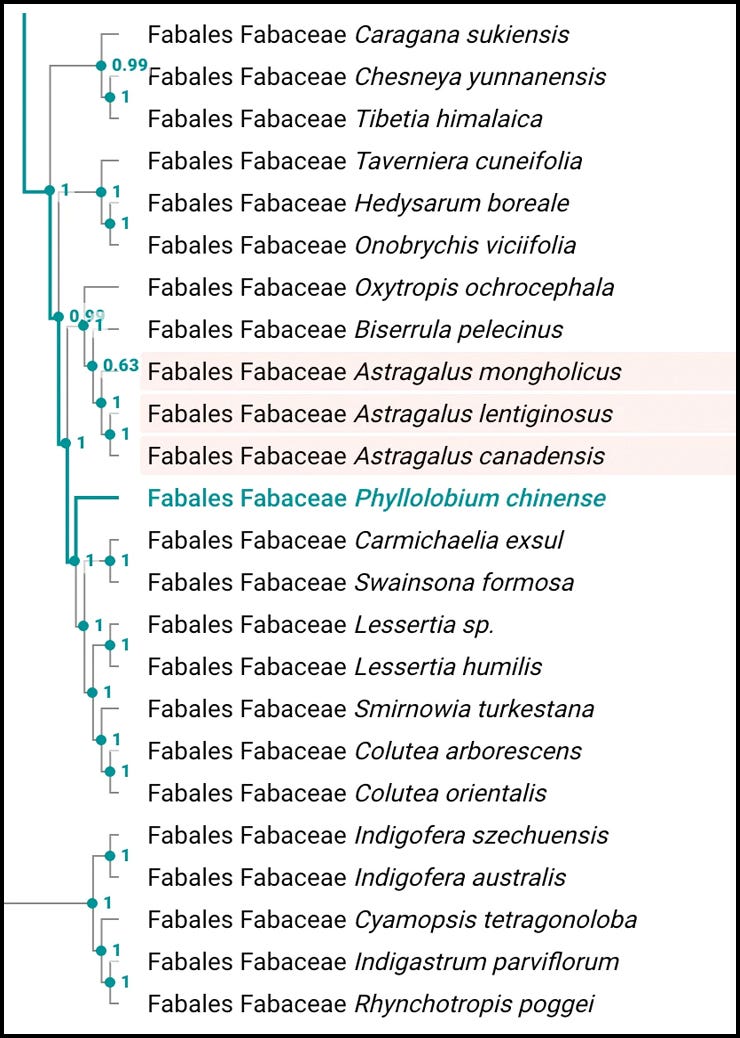
Position in the Tree of Life of Astragalus Cyri:
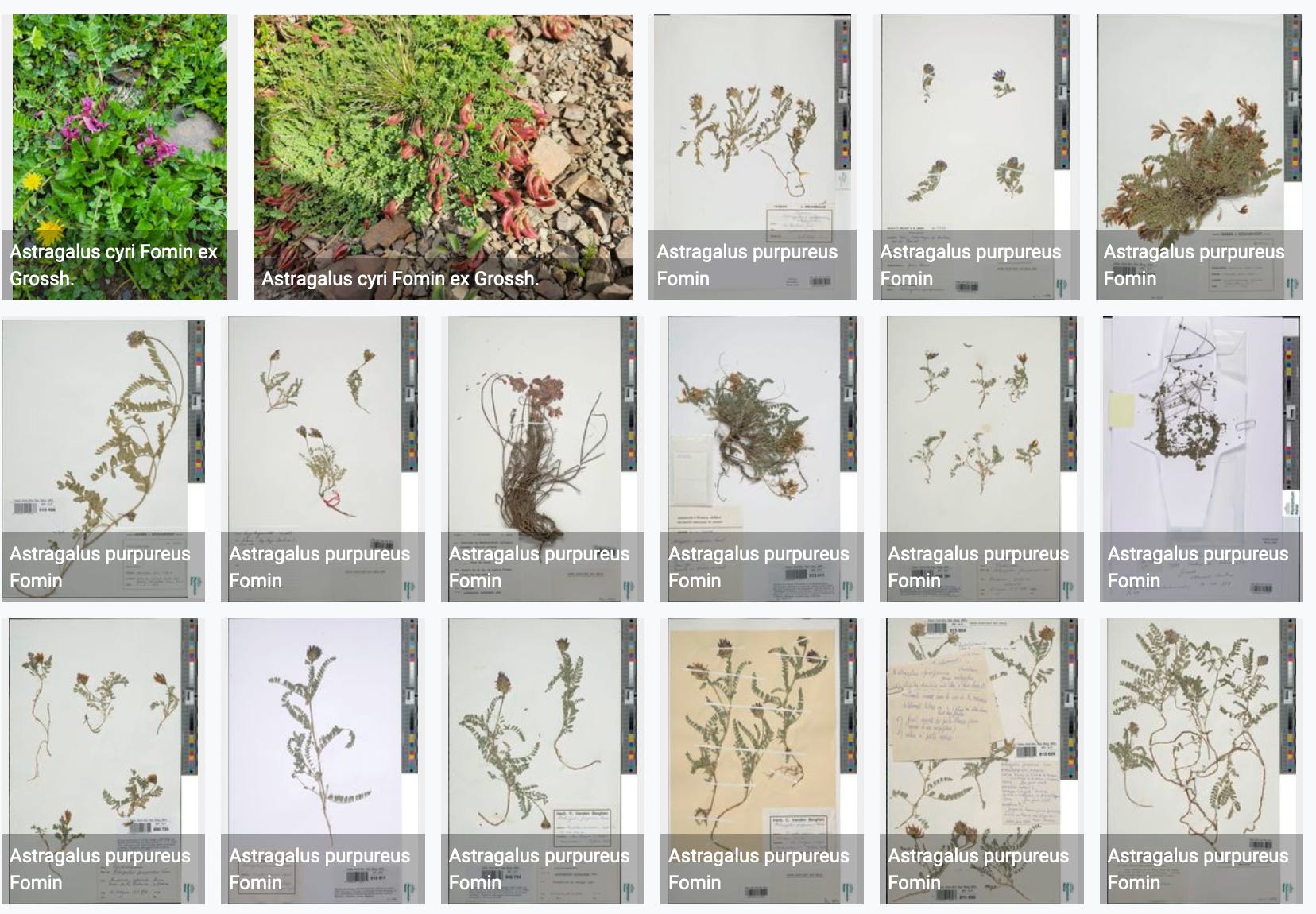
Herbarium specimens on the GBIF:
Expedition
We arrived at the location, and my colleagues began identifying areas they had visited over the past several years. It became apparent that one of the first plots had lost plants, so we continued our investigation. Populations were assessed using the Braun-Blanquet method. Specifically, population viability analysis involved counting the number of individuals in the target populations during the flowering phase. Sociability, vitality, and fertility will be measured for the target populations/individuals. Sociability refers to the degree of clustering (contagion) among plant units of a species and will be estimated using the following scale:
growing singly;
growing in small groups of 2-10 individuals;
growing in small patches (11-100 individuals);
growing in extensive patches (101-1000 individuals); and,
growing in great crowds (>1000 individuals).


Living collections at the Plants Conservation Department


Threats to survival


Possible threats are roads constructions, washing down the seeds during heavy rain (rills on the photo).
Some other plants and photographs


Takeaway
Sometimes we humans also are narrow and vulnerable, struggling to fit into our community. As we, similarly, plants have the right to exist despite our tendencies to build roads and overconsume nature. It is not necessary to be strong and broad; the niches we occupy have their own right to exist. We need to recognize the inherent value in all forms of life and ecosystems, without needing justification or explanation.
Wildlife Laboratories is free blog. But if you enjoyed this post, you can tell Wildlife Laboratories that their writing is valuable by buying a coffee. Any kind of coffee will be appreciated.